
The Instruments and Dances

A Malay Choir performs at an ANC-sponsored ceremony in District Six, Cape Town (South Africa), 2001. Photograph by Henry Trotter via Wikimedia Commons, released into the public domain.
The VOICE is the first known and oldest musical instrument, used differently from continent to continent and region to region. Locally, it is distinguished by the African call-and-response style with an Islamic-influenced karienkel.

Goema Drum, Cape Heritage Museum. Photograph by Heidi Erdmann.
A GOEMA DRUM is made from a barrel used to store wine or water on a ship with a buckskin pulled taught over one end. It is also known as a gommie, or gom-gom. It was the first instrument used in early goema music and was probably manufactured locally.
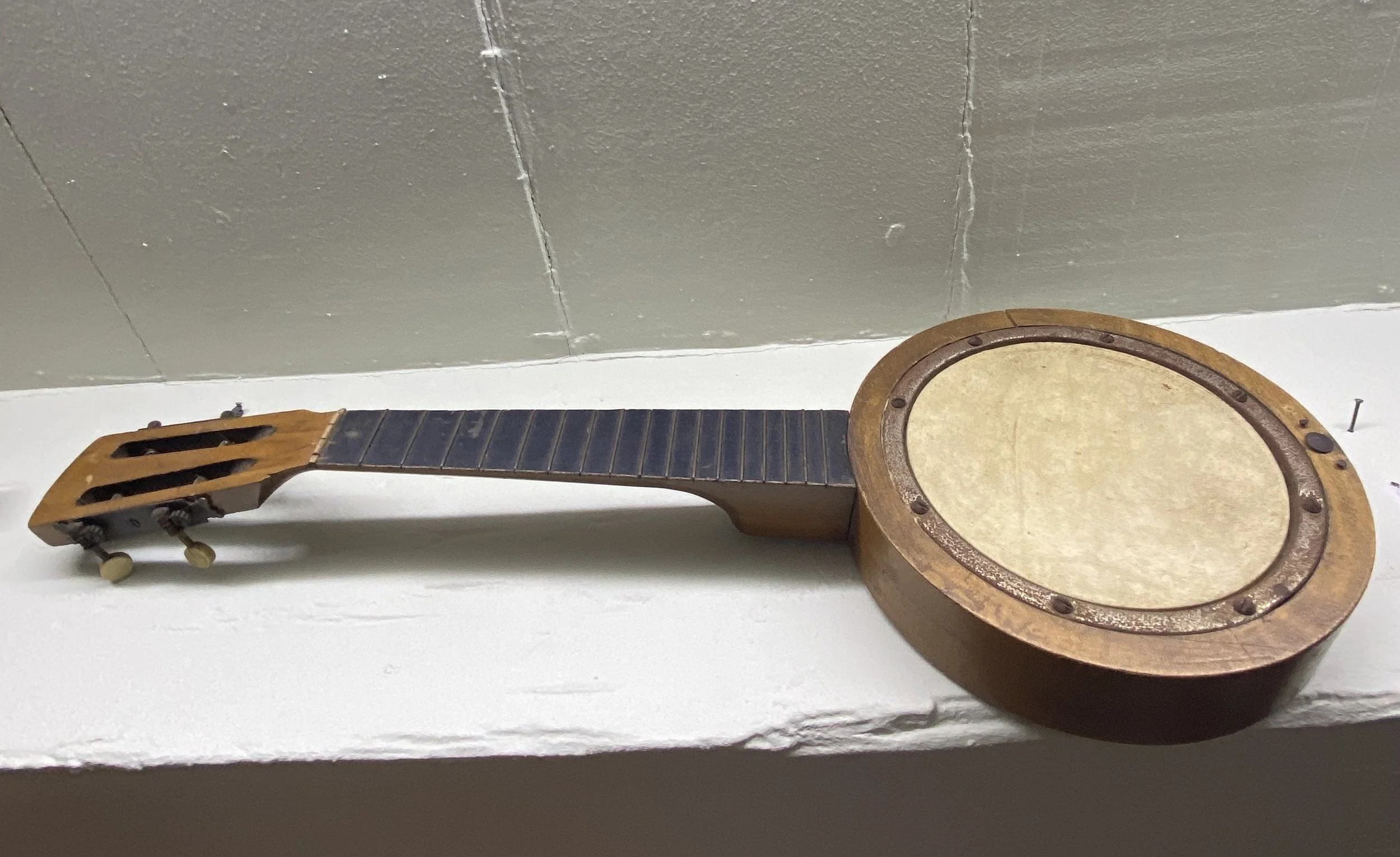
The Banjo, Cape Heritage Museum. Photograph by Heidi Erdmann.
The BANJO arrived in the Cape from America along with minstrelsy. The banjur is originally from West Africa and arrived by ship in America where it was adapted and became known as the banjo. It can be strummed, bowed or plucked. It is the main instrument of the Klopse, vastrap and boeremusiek bands.

Khoekhoe woman playing upon the ramkie. Drawing by Charles Davidson Bell (1834). From Wikimedia Commons, in the public domain.
The RAMKIE is a local interpretation of a single-, two- or three-snared stringed instrument, plucked rather than stroked, and inspired by a lute or ra-ving of Indian, Indonesian or Madagascan origin. At first the body was a hard-skinned calabash, which was later substituted by an oil tin and called a blikkitaar (tin guitar), which had more strings and was played like a guitar. It is the main instrument of the Khoekhoe rieldans.

Concertina. Photograph by Wiki Taro via Wikimedia Commons, released into public domain.
The CONCERTINA is a free reed instrument that was invented in Britain as an alternative to the harmonica or mouth organ in 1829. The most common model played in the Cape was the boerekonsertina, a basic model limited by the two keys in which you could play. It is used mainly by vastrap and boeremusiek bands.
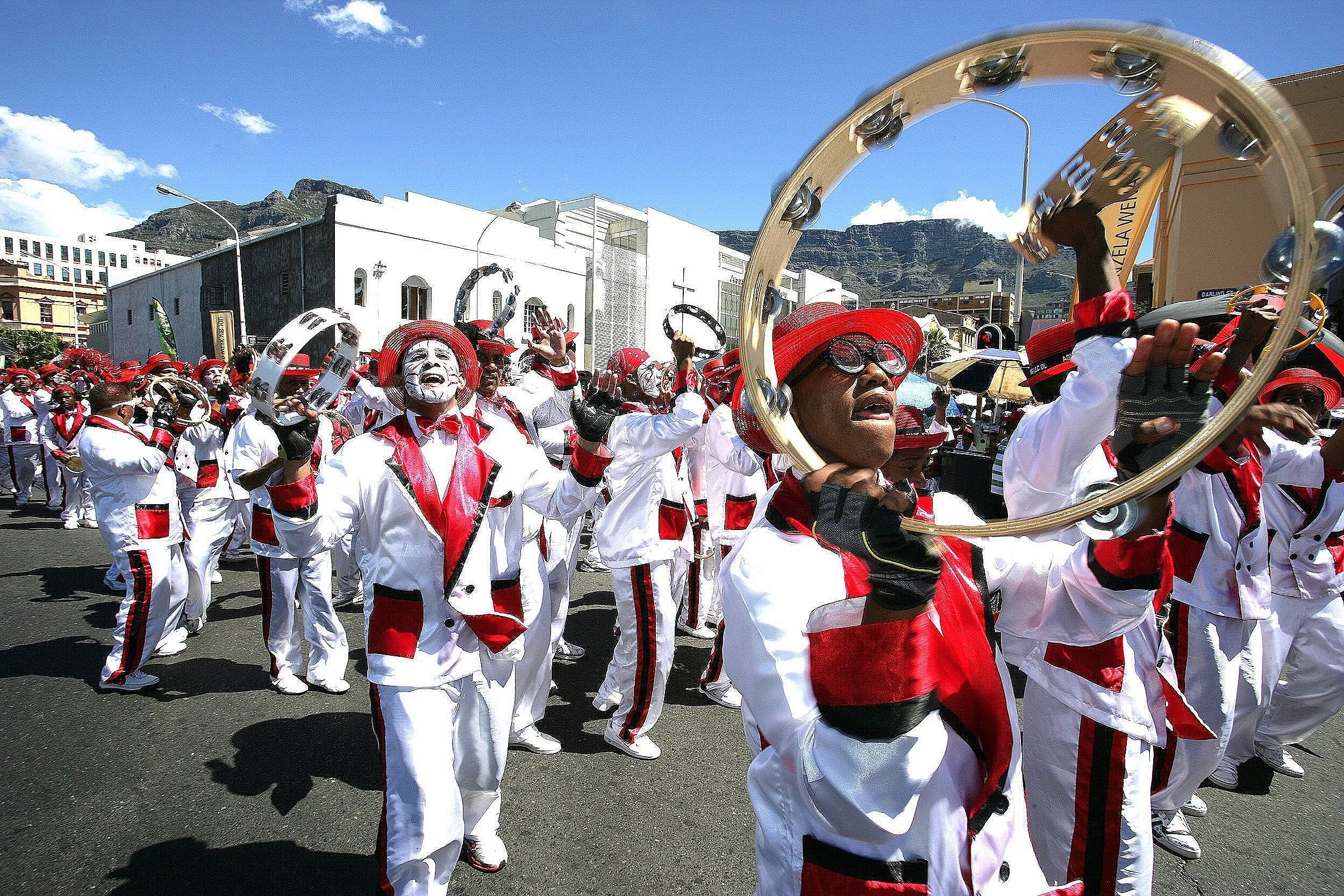
Minstrels in Cape Town with tambourines. Photograph from Wikimedia Commons; licenced under CC BY 2.0.
The TAMBOURINE is originally from the Middle East and was exported to Europe. It is used as a rhythmic signifier with the Klopse troupes.

Cape minstrels at the Stellenbosch Harvest Parade on 25 January 2014. Photograph by HelenOnline via Wikimedia Commons, licenced under CC BY-SA 3.0.
BRASS INSTRUMENTS such as saxophones, trumpets and trombones arrived with the Moravian Brass Band at the Genadendal Training School and later with the Salvation Army bands.
The instruments used to make the music are as significant as the beat or pace of the song: 2:4 (polka); 3:4 (waltz); 4:4 or 6:8 (march music and the quadrille).
Dances

Protea Village, Kirstenbosch in the early 20th century. Photograph from the Western Cape Archives and Records Service (E 15148).
Langarm is perhaps better described as a social gathering rather than a specific music genre or dance style. Langarm – which means ‘long arm’ – is a ballroom dance using the quadrille style. Early variations of the music are interpretations of popular American jazz tunes typically played fast to a vastrap or goema beat. Langarm socials are typically hosted by small ensembles and rooted in brass music, with the saxophone, played in a particular style, as the lead instrument. The style shares features with vastrap and boeremusiek and is a major influencer of Cape Jazz.

The Dark Fantastic & the Light Fantastic, Cape Malays dancing and playing trommel, horn und ramkie, circa 1840. Drawing by Charles Davidson Bell. From Wikimedia Commons.
Vastrap is a variation of a dance and a beat, more than it is a genre. Vastrap, meaning ‘firm step’, is possibly derived from Khoekhoe or San dances. Based on European folk music such as the polka or mazurka, but with a slower beat and dance steps, it is likely the link between goema/langarm and boeremusiek. When first observed, vastrap was defined as ‘a Hottentot dance’ that could be ‘performed by a single person, using peculiar movements of legs and feet’.
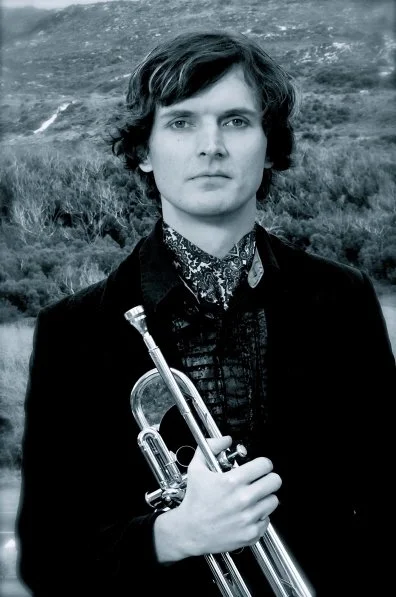
Image courtesy of Alex Bozas.
“It is impossible to play vastrap unless one believes in magic” - Alex van Heerden (1974-2009), a musician who mixed a range of South African genres and sounds - boeremusiek, goema, vastrap, and the riel, among them.

Die Vyf Vastrappers (1926). Photographer unknown. Courtesy of the Tradisionele Boeremusiekklub van Suid-Afrika.
Boeremusiek is a descendent of goema and similarly incorporates European influences. It is considered a rural music type (the direct translation is ‘the music of farmers’) with its own distinct beats, likely a result of interactions between white farmers and their enslaved or Khoekhoe workers. Boeremusiek ensembles feature banjo, guitar and violin, and sometimes the accordion and mouth organ, with the concertina as the leading instrument.
Watch a video of the Klipwerf Orkes, a well-known Boeremusiek band in South Africa.
Listen to Rusoord Vastrap by Corrie Els En Sy Orkes from 1960.

Tom Tom dance - Mozambiques and Mixed Race by Charles Davidson Bell, 1830s. John and Charles Bell Heritage Trust Collection (BC686C14), University of Cape Town Libraries.
Riel and Rieldans is the music and dance developed by the Khoekhoe inhabitants of the region. Songs were sung in Afrikaans to the accompaniment of the ramkie or blikkitaar. Stylistically it is closer to vastrap and boeremusiek than to goema/langarm and the later music accompaniment is primarily vastrap. The dance is thought to be based on ancient San or Khoekhoe dances, influenced by the Schottische reel and/or quadrille.