
Goema Now

The famous Cape Jazz musician, Abdullah Ibrahim (aka Dollar Brand), at the Moers Festival 2011. Photo by Michael Hoefner via Wikimedia Commons, licensed under the Creative Commons Attribution-Share Alike 3.0 Unported.
Goema is found in the beat and the instrumentation of the Kaapse Klopse sound. Cape Jazz also retains powerful traces of goema.
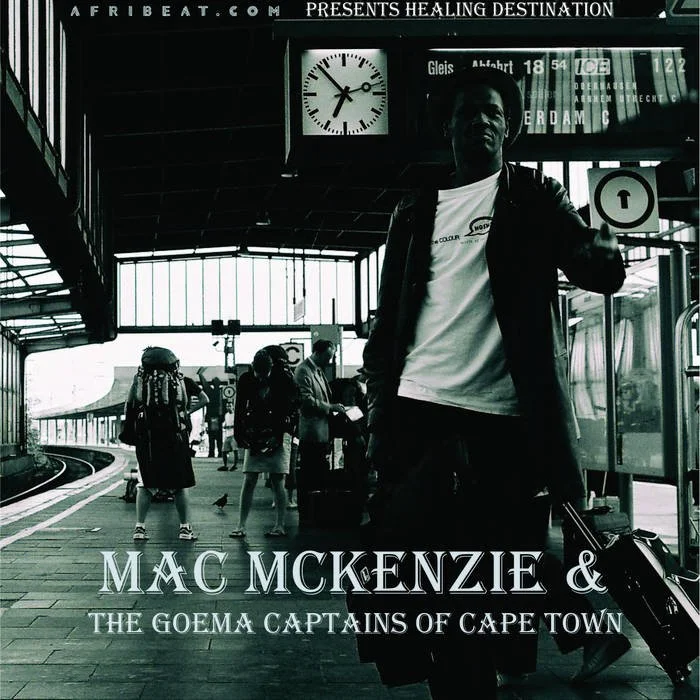
Album Cover of Healing Destination released in 2013.
The Genuines (Mac McKenzie, Hilton Schilder, Gerard O’Brien and Ian Herman) made a successful attempt to cross goema with rock and punk in the 1980s.
Mac McKenzie (1951-2024) had a lifelong entanglement with goema that started with his father, Mr Mac, a banjo player and the leader of the Cornwall troupe. After the Genuines, Mac swapped his bass for a guitar and formed the Goema Captains of Cape Town; he also experimented with orchestral goema.
Click here to listen to Mac McKenzie and the Genuines.
Click here to view a short video “Goema Goema - Mac McKenzie & the Goema Captains of Cape Town”.
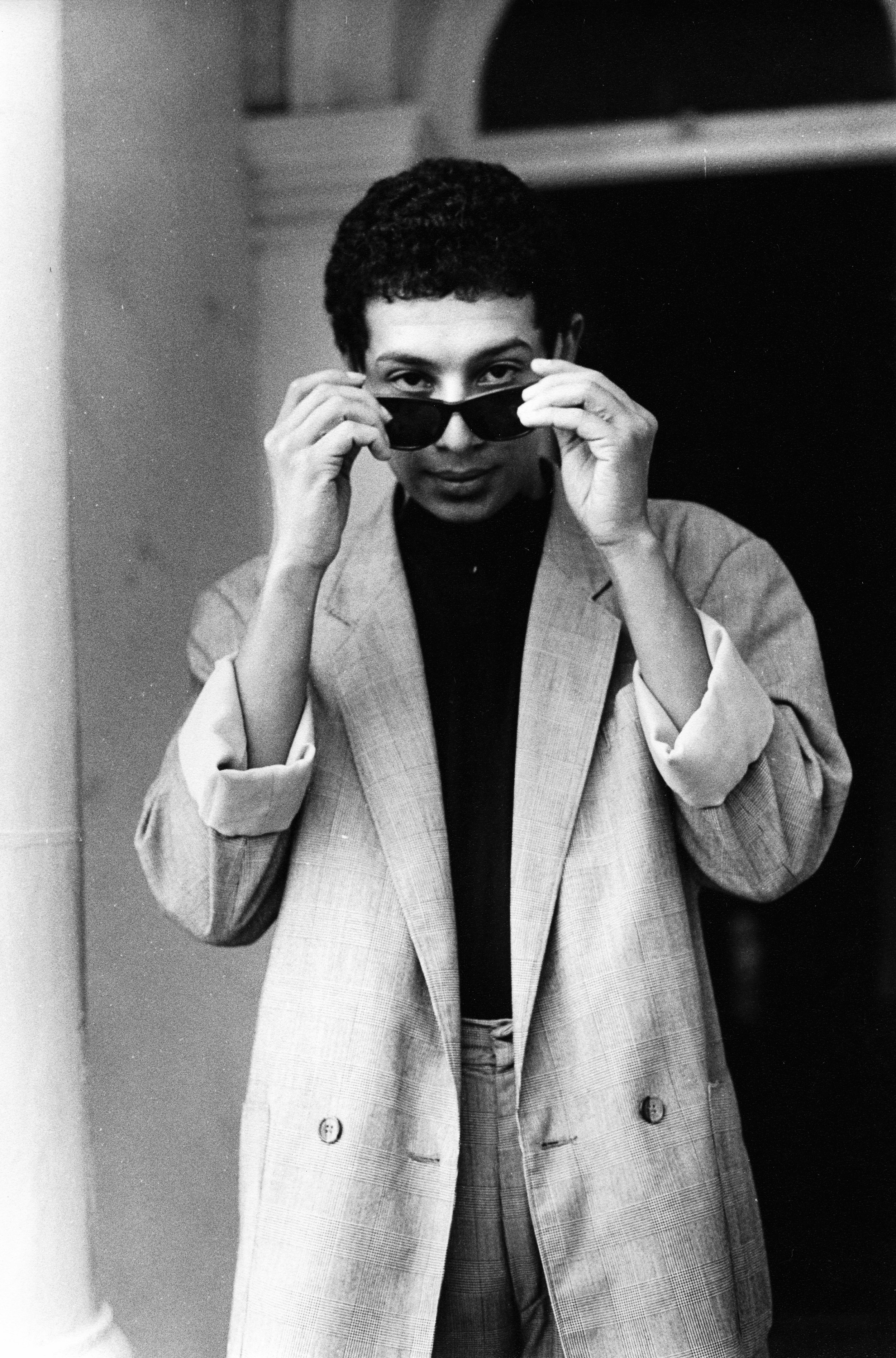
Hilton Schilder in 1986. Photo courtesy of Joëlle Chesselet.
Hilton Schilder also comes from a musical family. His father, Tony Schilder was also a bandleader and a well-known pianist. Hilton has contributed much to moulding the sound of what is today known as Cape Jazz, and he continues to play an influential role in goema’s sonic development.

Taliep Petersen and David Kramer, Baxter Theatre, 2006. Photograph by Johan Wilke, courtesy of David Kramer.
Taliep Petersen (1950 – 2006) and David Kramer’s musical, Ghoema! (2005), tells the story of the Cape’s history of enslavement and its creolisation. Scholar Paula Fourie notes that the musical presented white Afrikaans speakers with evidence of their involvement in creolisation.
David Kramer argues that goema is not a dying genre, nor a thriving one. The long silencing of the history of enslavement at the Cape and in South Africa in general, and the fact that this history remains under threat of erasure, may be partly responsible for his statement.
Jazz musicians like Shane Cooper and Kyle Shepard are successfully pursuing goema beats and styles. Jannie van Tonder's Hanepoot Brass Band's repertoire of African jazz classics and their own compositions have a strong goema feel.
Young singers like Jodi Jantjies and Boskasie are writing hit songs in traditional goema styles, with lyrics in Afrikaans and English.

Syncretic music is recognised as intangible heritage. Sega and maloya of the Indian Ocean islands; samba of Brazil; and the morna of Cabo Verde are all safeguarded through inscription with UNESCO. Goema does not enjoy Intangible Heritage Status in South Africa.
© Text: Heidi Erdmann and Carsten Rasch (May 2025).
References:
Ballantine, Christopher. (1993). Marabi Nights: Early South African Jazz and Vaudeville. Johannesburg: Ravan Press.
Britz, Engela (2019). Songs in the Dust: Riel Music in Northern and Western Cape Provinces, South Africa. MA Thesis.
Coplan, David. (1985) In Township Tonight!: South Africa's Black City Music and Theatre. London: Longman
Fourie, Paula. (2022). ‘Ghoema’ in Herri #08. https://herri.org.za/8/paula-fourie/
Martin, Denis-Constant. (2013). Sounding the Cape Music. Identity and Politics in South Africa. African Minds.
Muller, Stephanus. (2011). "Reshaping Remembrance ~ Boeremusiek." Rozenberg Quarterly. A Grundlingh & S Huigen (Eds.) Reshaping Remembrance. Critical Essays on Afrikaans Places of Memory. Rozenberg Publishers.
Van Heerden, Alex. https://newcape.co.za/www.newcape.co.za/alex_van_heerden.html
Winberg, Christine. (1991). ‘Satire, Slavery and the Ghoemaliedjies of the Cape Muslims’ in New Contrast, Vol. 19 (4), pp. 78-96.
In memory of Mac McKenzie and his role in keeping goema alive.
We would love to hear what you think of the exhibition, as well as your experiences and memories related to the Kaapse Klopse and Goema music. Please use the Comments section below to share your thoughts and stories.